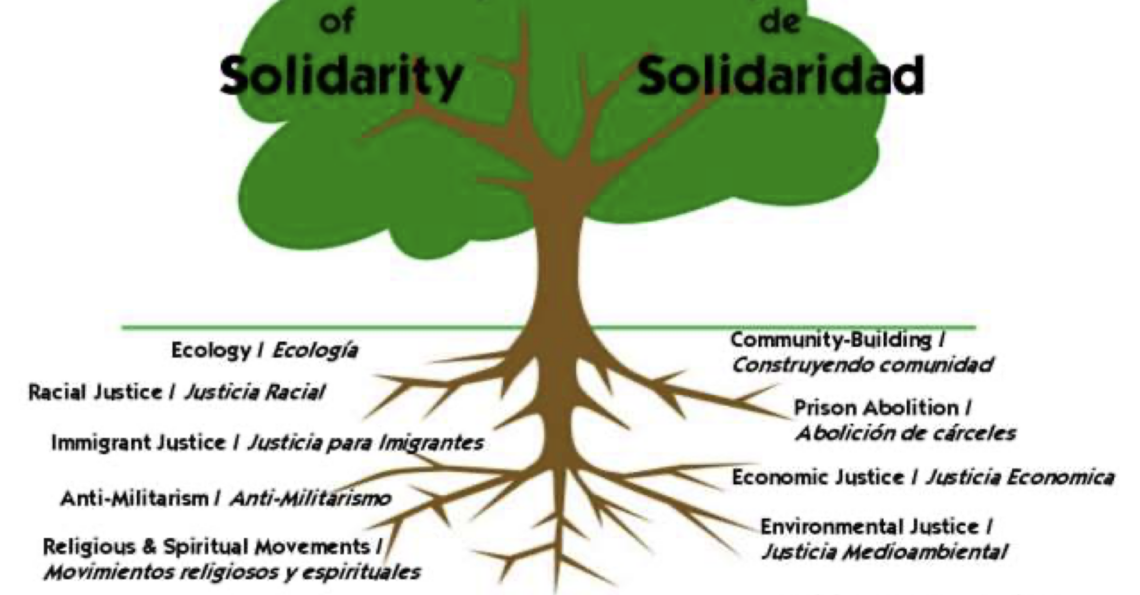
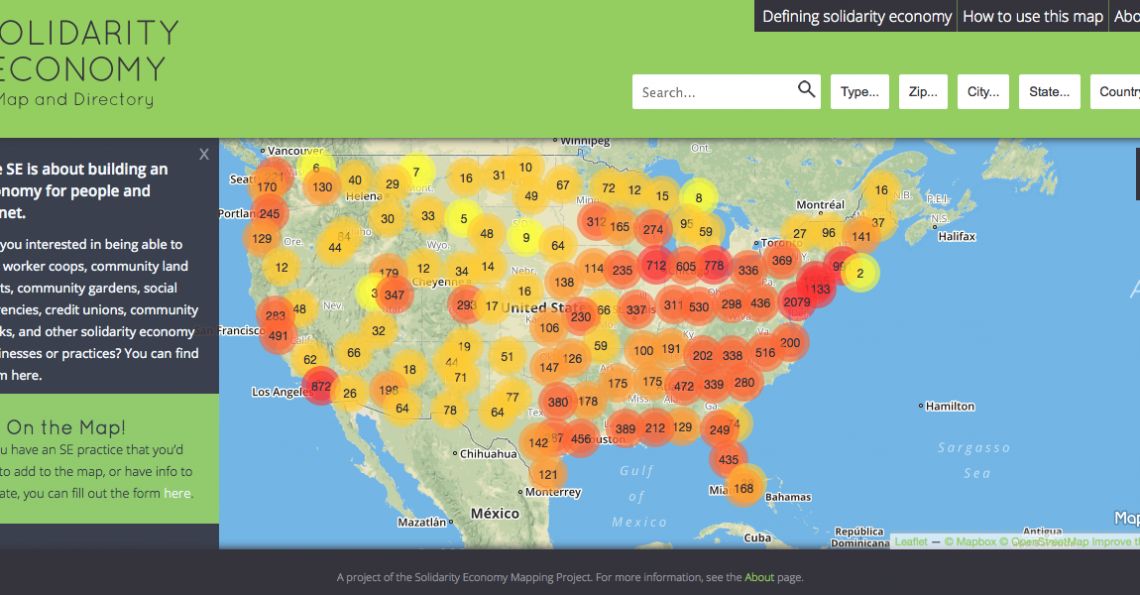
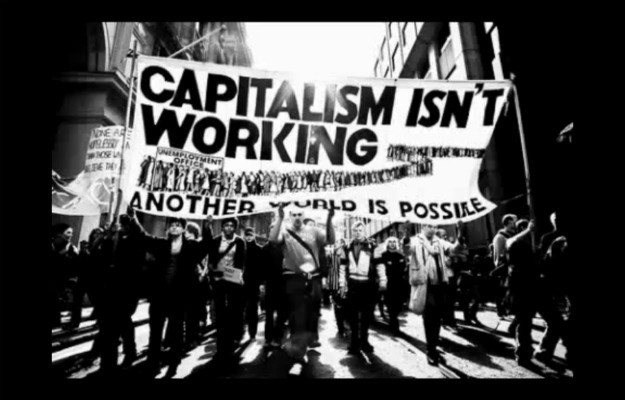
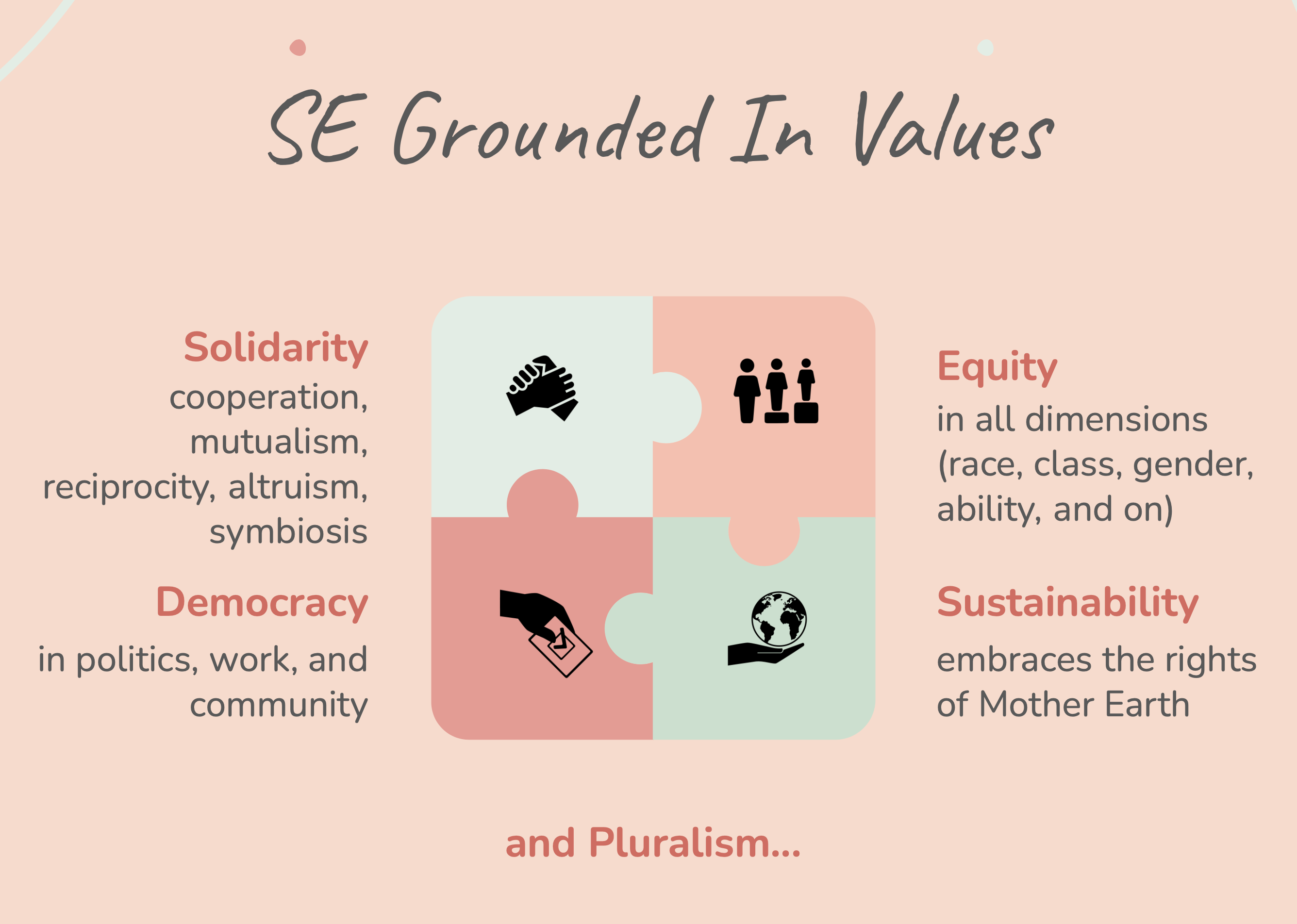
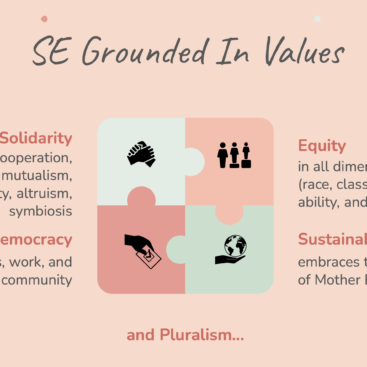
The Solidarity Economy is an alternative development framework that is grounded in practice and the in the principles of: solidarity, mutualism, and cooperation; equity in all dimensions (race/ethnicity/ nationality, class, gender, LGBTQ); social well-being over profit and the unfettered rule of the market; sustainability; social and economic democracy; and pluralism, allowing for different forms in different contexts, open to continual change and driven from the bottom-up.

Venezuela's Solidarity Coops

Photo: Denise Obregon, Sewing Cooperativista

Venezuela's Experiments
in the Solidarity Economy


By Humberto Márquez

CARACAS, Nov 17 (IPS) - "I used to be a buhonera (street vendor), but I got tired of working in all weather conditions, rain or shine, so I joined the Venezuela Avanza (Venezuela Advances) cooperative. Here I earn less money and the heat in the warehouse is stifling, but we hope our working conditions will improve with time," Ana Ortiz, a mother of seven, told IPS as she sat at her sewing machine.

State-financed cooperatives are mushrooming in Venezuela, hand-in-hand with the boom in oil prices, and are supposed to be laying the foundations of a new socioeconomic model. However, some weaknesses are showing through, such as the creation of "phantom cooperatives" and a lack of self-financing.

Solidarity Economy in Brazil

Photo: Brazil's Landless
Farmers Meet Venezuela Coop
Brazil's landless farmers meet Venezuela co-opSugar Workers' Coop
Supports 4,300
Families at 48 Mills

By Mario Osava

RIO DE JANEIRO, Jan 11 (IPS) - The Harmony Agricultural Company has become Brazil’s largest worker-managed business in the solidarity economy. It provides employment for 4,300 families who work 26,000 hectares of land, and its main activity is producing sugar at 48 mills.

When the company was in crisis in 1993, the first reaction of the workers and their unions was the usual one of trying to ensure that the 2,300 workers who were dismissed received back pay and severance pay. But two years later, the unions took another approach.

Their goal was to win back the lost jobs and maintain the remaining ones, while continuing an activity essential to the economy of Catende, in the northeastern state of Pernambuco.

They applied for the owners of the company to be forced to declare bankruptcy, and took over the firm’s administration, under the supervision of the justice system. Since then, they have resumed sugar production and diversified into other agricultural and industrial activities.

Commemorating Dr King: Green Jobs

King's Legacy Grows

Green In Memphis


By Jeremy Brecher, Tim Costello, and Brendan Smith

Portside.org
March 31, 2008

Today they'd be called "green-collar jobs" cleaning up the environment. Back then, the workers who performed those jobs were just garbage men. And they were treated like garbage. Martin Luther King, Jr. died fighting to make their green-collar jobs be good jobs.

On the 40th anniversary of King's assassination, the green-collar jobs group Green for All is bringing people from all over the country to Memphis, Tennessee April 4-6 for The Dream Reborn, a celebration of the life of Dr. King -- and a call to create millions of good green-collar jobs as a pathway out of poverty.

The Dream Reborn will "bring together a generation of new leaders who are taking on the chief moral obligation of the 21st century, building a green economy for all."