
by Rick Wilson
Originally published in Waging Nonviolence and CounterCurrents
“As people across the United States face massive cuts to Medicaid, SNAP and other vital programs, many are asking: What happens when the systems we rely on fail us? And what happens when our communities are torn apart by toxic inequality, political fragmentation and declining social trust?
“The solution may lie in something that humans have been doing throughout our existence: taking care of each other, often without realizing it. Today that’s what some of us call the “solidarity economy.” …
“According to the U.S. Solidarity Economy Network, which emerged out of the 2007 U.S. Social Forum, the principles of this new economy include: solidarity, cooperation and mutualism, equity in all dimensions, participatory democracy, sustainability and pluralism.
“Examples include Indigenous approaches to survival and sustainability, cooperatives, community land trusts, credit unions, peer lending, mutual aid, community-led economic development, bartering, community-supported agriculture and fair-trade products. They can also be found in the informal ways in which family, friends and neighbors come together all the time to help each other…
“I’ve come to believe that solidarity economy efforts, great and small, can help reweave the social fabric…
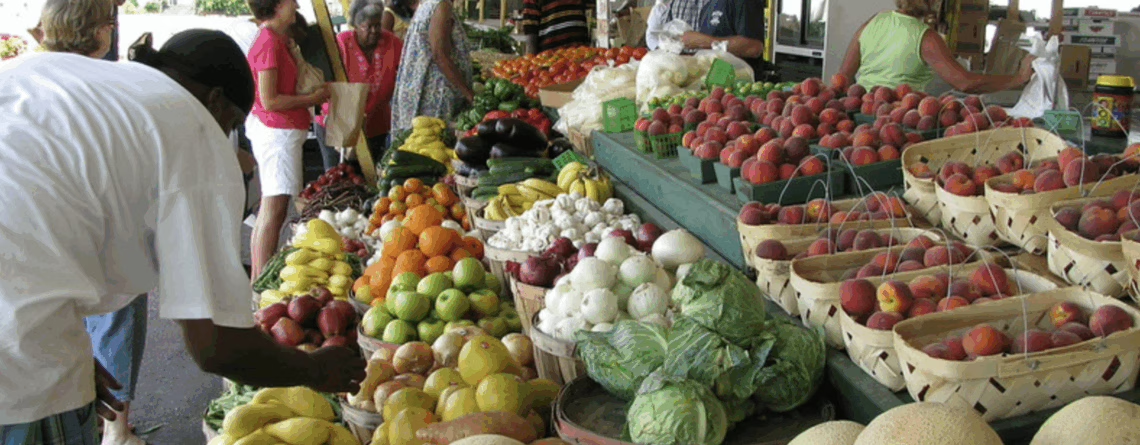
“Farmers markets, which have nearly tripled in my home state since 2019, are a perfect example of how a once marginal economic alternative has gone mainstream, with benefits beyond fresh food and cash in farmers’ pockets…
“For this kind of economy to grow, however, there need to be easy on-ramps for people with diverse backgrounds and opinions to engage in these alternatives. I’m convinced that the more people experience the humanizing benefits of direct connections and mutual support, the more bridges can be built in the future…”





Leave a Reply